Book Appointment Now
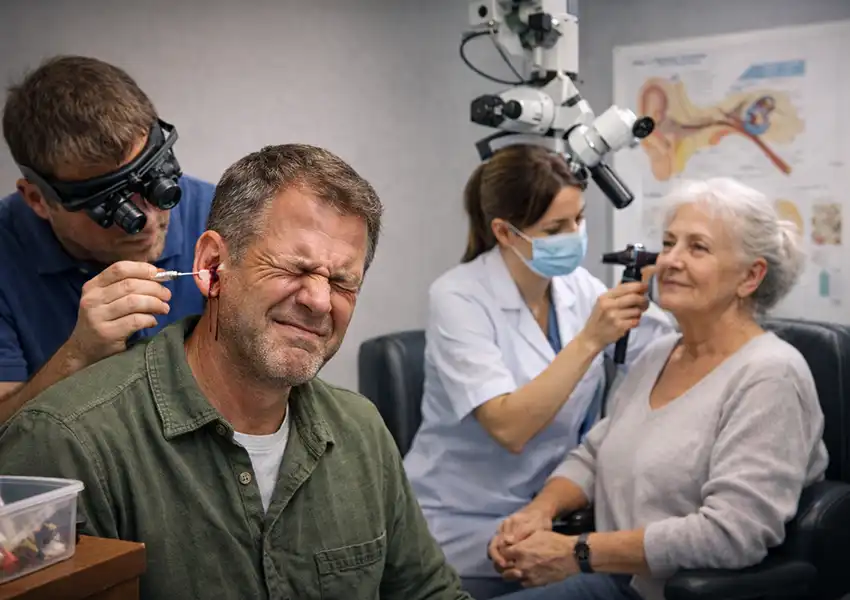
Earwax Removal – The Hidden Dangers of Unqualified Providers
- On
- InHealth
Why Earwax Removal Requires Proper Clinical Training
Earwax removal is often dismissed as a simple, routine procedure, but in reality it is a delicate clinical task that requires anatomical knowledge, safe technique and the ability to recognise when something is wrong. Across Northern Ireland, more people are turning to private earwax removal services as NHS provision has been reduced or removed entirely. Unfortunately, this shift has opened the door to a growing number of unqualified earwax removal providers who lack the training, regulation and clinical judgement needed to perform the procedure safely.
Many of these providers are well‑intentioned individuals, but intention does not equal competence. Some are care home staff, pharmacy staff or retail workers who have completed only a short commercial course. Others have no clinical background at all. Without the oversight of a regulatory body or the accountability that comes with professional registration, the risks to patients are significant.
The Rise of Untrained Earwax Removal Providers
The demand for earwax removal in Northern Ireland has increased sharply as GP practices have stepped back from offering the service. Long waiting lists and inconsistent access have pushed patients toward private clinics, mobile providers and high‑street services. While some of these providers are highly trained clinicians, many others are not.
Short courses in microsuction or irrigation are widely marketed online, often promising that anyone can become an earwax removal practitioner in a single day. These courses may teach the basic technique, but they cannot replicate the depth of clinical training required to understand ear anatomy, identify red flags or manage complications. When someone without clinical experience attempts earwax removal, the risk of harm increases dramatically.
The Real‑World Risks of Unqualified Earwax Removal
The dangers associated with unqualified earwax removal providers are not hypothetical. Patients across Northern Ireland are reporting injuries, infections and incomplete procedures that require follow‑up care from trained clinicians. The ear canal is a sensitive, narrow structure, and even minor errors can cause significant discomfort or damage.
One of the most common issues is trauma to the ear canal. Untrained providers may insert instruments too deeply, scrape the skin or cause bleeding. In other cases, they may push wax further into the canal, worsening the blockage. Some fail to recognise when wax is impacted, when the eardrum is perforated or when infection is present. These are situations where earwax removal should not proceed, yet without clinical training, the provider may not know to stop.
There is also the risk of missed diagnoses. Conditions such as otitis externa, cholesteatoma, fungal infections and foreign bodies can be overlooked by someone without medical training. A qualified clinician knows when to refer a patient to ENT services, but an unqualified provider may continue regardless, delaying essential treatment.
Why Choosing an NMC‑Registered Nurse Matters
One of the safest ways to protect yourself is to choose an NMC‑registered nurse for earwax removal. Nurses registered with the Nursing and Midwifery Council have undergone years of formal education, supervised clinical practice and ongoing professional development. They are trained to assess, diagnose, treat and refer appropriately, and they are legally accountable for the care they provide.
An NMC‑registered nurse understands the complexities of ear anatomy and can identify when earwax removal is safe to perform and when it is not. They follow strict infection control standards, maintain clinical governance and carry professional indemnity insurance. They are also required to adhere to the NMC Code, which ensures safe, ethical and evidence‑based practice.
Unlike unqualified providers, nurses can recognise red flags such as perforated eardrums, active infections, sudden hearing loss or unexplained pain. They know when to stop, when to refer and how to manage complications. This level of clinical judgement cannot be taught in a one‑day course.
The Problem With Care Staff and Pharmacy Staff Offering Earwax Removal
It is increasingly common to see earwax removal being offered by care staff or pharmacy staff who have been given brief training. While these individuals play vital roles in healthcare settings, earwax removal is not within their scope of practice unless they are clinically trained and appropriately regulated.
Care staff may be experienced in personal care, but they are not trained in clinical assessment or invasive procedures. Pharmacy staff may be skilled in dispensing medication and offering advice, but they are not trained to diagnose ear conditions or manage complications. When these roles are stretched beyond their training, patient safety is compromised.
How Patients Can Protect Themselves
Patients in Northern Ireland can protect themselves by asking simple but important questions before booking earwax removal. Who will be performing the procedure? Are they an NMC‑registered nurse, HCPC‑registered audiologist or ENT specialist? What training have they completed? Are they insured? Do they follow clinical governance standards?
Choosing a qualified, regulated professional is the best way to ensure safe, effective earwax removal. Your hearing is too important to risk with untrained providers.
Final Thoughts
The hidden dangers of unqualified earwax removal providers are becoming increasingly visible across Northern Ireland. As more people seek private services, the need for proper regulation, public awareness and professional standards has never been greater. Earwax removal is a clinical procedure that requires skill, training and accountability. By choosing an NMC‑registered nurse, patients can protect their hearing, their health and their peace of mind.
Newsletter Updates
Enter your email address below and subscribe to our newsletter