Book Appointment Now

Ear Wax and Ageing: Why Older Adults Need More Frequent Checks
As we grow older, our ears change in ways most people never think about. Hearing loss is often blamed on “just getting older,” but in many cases the real culprit is something far simpler, impacted ear wax. For older adults, ear wax can become drier, harder, and more difficult to clear naturally, which means blockages become more common and more stubborn. Regular ear‑wax checks aren’t just a nice idea; they’re an essential part of maintaining comfort, communication, and overall wellbeing.
For families, carers, and older adults themselves, understanding how ageing affects ear wax can make a huge difference. And with safe, gentle options like microsuction ear wax removal available across Northern Ireland, including home visits, staying on top of ear health has never been easier.
How Ageing Changes Ear Wax
Ear wax, or cerumen, is a natural, protective substance. It traps dust, moisturises the ear canal, and prevents infection. But the way our bodies produce ear wax changes over time.
Drier, Harder Ear Wax
As we age, the glands in the ear canal produce wax that is:
- Less oily
- More brittle
- More likely to clump and compact
This makes it harder for the ear’s natural “self‑cleaning” mechanism to work. Instead of migrating outward, wax can build up deep inside the canal.
Narrower Ear Canals
Ageing can also cause the ear canal to become narrower or slightly collapsed, making it easier for wax to get trapped and harder for it to escape.
More Hair in the Ear Canal
For many older adults, especially men, increased ear‑canal hair acts like a net, catching wax and preventing it from moving outward.
These changes mean that even people who never had earwax issues earlier in life may suddenly find themselves dealing with blockages, discomfort, or muffled hearing.
Why Ear Wax Build‑Up Affects Older Adults More Seriously
For younger people, a bit of wax build‑up is usually just an annoyance. But for older adults, the impact can be far more significant.
Hearing Loss and Communication Difficulties
Even a small amount of impacted wax can dramatically reduce hearing clarity. For someone already managing age‑related hearing changes, this can tip the balance from “coping” to “struggling.”
Increased Risk of Falls
Research shows that reduced hearing can affect balance and spatial awareness. For older adults, this can increase the risk of falls, a major health concern.
(See NHS guidance on hearing and balance: https://www.nhs.uk/conditions/hearing-loss/
Cognitive Load and Fatigue
Straining to hear conversations or the television forces the brain to work harder. Over time, this can contribute to fatigue, social withdrawal, and reduced confidence.
Hearing Aid Problems
Hearing aids and ear wax have a complicated relationship:
- Wax can block the device’s sound outlet
- Hearing aids can push wax deeper into the canal
- Feedback, whistling, and reduced clarity are common
Regular ear‑wax checks help keep hearing aids working properly and comfortably.
Signs of Ear Wax Build‑Up in Older Adults
Many older adults don’t realise their hearing issues are caused by wax. Common signs include:
- Muffled or “underwater” hearing
- A feeling of fullness or pressure
- Ringing or buzzing
- Difficulty hearing the TV or conversations
- Sudden changes in hearing
- Itchiness or discomfort
Because these symptoms overlap with age‑related hearing loss, wax is often overlooked, which is why routine checks are so important.
Why Regular Ear‑Wax Checks Matter
Routine ear‑wax checks offer several benefits for older adults:
Early Detection Prevents Bigger Problems
Catching wax build‑up early prevents complete blockages and reduces the risk of infection or sudden hearing loss.
Improved Communication and Quality of Life
Clear ears mean clearer conversations, better social engagement, and more confidence.
Better Hearing Aid Performance
Regular checks ensure hearing aids sit comfortably and work as intended.
Comfort and Peace of Mind
Knowing that ear health is being monitored removes worry for both older adults and their families.
Safe, Gentle Ear Wax Removal for Older Adults
Not all ear‑wax removal methods are suitable for older adults. Cotton buds, ear candles, and DIY kits can cause damage, push wax deeper, or lead to infection.
The safest, most effective method recommended by hearing‑care professionals is microsuction, a quick, gentle procedure that uses a tiny suction device to remove wax without water. It’s ideal for older adults because it’s:
- Safe for narrow or sensitive ear canals
- Suitable for people with perforated eardrums
- Comfortable and fast
- Less messy than irrigation
Clear Hearing NI specialises in professional microsuction ear wax removal, offering both clinic appointments and home visits across Tyrone, Fermanagh, and Armagh.
Internal link: https://clearhearingni.com/ear-wax-removal/
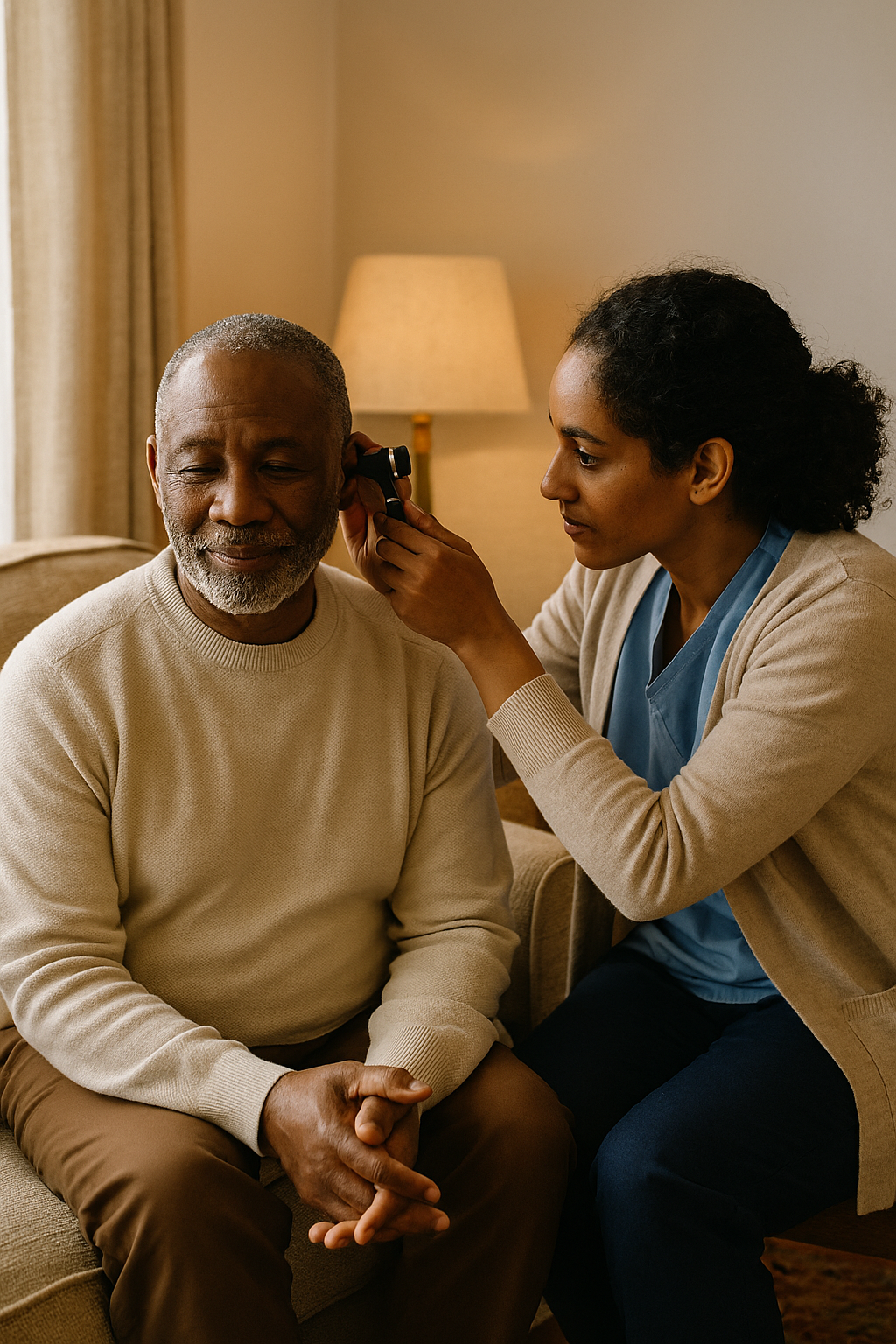
The Benefits of Home Ear‑Wax Removal Visits
For many older adults, travelling to a clinic can be difficult. Home visits offer a practical, reassuring alternative.
A home appointment allows:
- A familiar, comfortable environment
- Reduced stress for those with mobility issues
- Easier support from family or carers
- A calm, unhurried experience
Clear Hearing NI brings all necessary equipment directly to the home, ensuring the same professional standard of care without the need to travel.
How Often Should Older Adults Have Ear‑Wax Checks?
While every individual is different, many older adults benefit from checks every 6 to 12 months. Those who wear hearing aids may need more frequent checks, as devices can encourage wax build‑up.
If symptoms appear suddenly, such as muffled hearing or discomfort, it’s best to book an appointment promptly rather than waiting for a routine check.
Supporting Older Adults With Better Ear Care
Families and carers play a vital role in helping older adults maintain good ear health. Encouraging regular checks, watching for symptoms, and avoiding unsafe home remedies can make a meaningful difference.
For professional, gentle, and reliable ear‑wax removal, Clear Hearing NI provides a trusted service tailored to the needs of older adults across Northern Ireland.
Newsletter Updates
Enter your email address below and subscribe to our newsletter