Book Appointment Now
The Growing Shortage of Expert Earwax Removal Appointments in Northern Ireland
- On
- InHealth
Earwax Removal Appointments in Northern Ireland: Why It’s Becoming So Difficult
Earwax removal appointments in Northern Ireland are becoming increasingly difficult to access through the Health and Social Care system (HSCNI). What was once a routine service offered by GP practices and community clinics is now limited, delayed, or unavailable for many patients. As waiting lists grow, more people are left dealing with hearing problems, discomfort, and uncertainty about where to turn for help.
This shift hasn’t happened overnight. It reflects wider pressures across primary care, audiology, and ENT services. For patients, the result is often the same: long waits, repeated GP visits, or the need to consider private treatment simply to have their ears checked and cleaned. Something that used to be straightforward has quietly become a significant challenge.
Why Are Earwax Removal Appointments in Northern Ireland So Limited?
The shortage of earwax removal appointments in Northern Ireland is closely tied to capacity challenges within HSCNI. Rising demand, staffing shortages, and budget constraints have placed significant strain on audiology and ENT departments. As services are forced to prioritise urgent and complex cases, routine procedures such as earwax removal are often reduced or removed altogether.
For many years, GP practices offered earwax removal using irrigation or microsuction. It was considered part of standard primary care. But over time, several factors have changed that landscape:
- Increased clinical workloads have pushed GPs to focus on essential medical care.
- Updated clinical guidance has made irrigation less favourable due to risks for certain patients.
- Training and equipment requirements for microsuction have made it harder for practices to maintain the service.
- Budget pressures have forced surgeries to cut non‑core services.
As a result, many GP practices across Northern Ireland have stopped offering earwax removal altogether. Patients are often told to use ear drops, wait for symptoms to worsen, or seek private care. This has created a bottleneck in the system, with ENT departments receiving referrals for issues that could have been resolved quickly in primary care.
Who Is Most Affected by the Lack of Earwax Removal Services?
Earwax buildup is extremely common, and for many people it’s more than a minor inconvenience. Older adults, hearing aid users, and people with narrow or curved ear canals are particularly prone to impacted wax. When earwax becomes stuck or hardened, it can cause a range of symptoms:
- Hearing loss or muffled hearing
- Ear pain or pressure
- Dizziness or balance issues
- Tinnitus
- Recurrent infections
For older adults, even mild hearing loss can affect communication, confidence, and social engagement. When hearing aids are involved, the problem becomes even more disruptive. Hearing aids simply cannot function properly when wax blocks the ear canal or clogs the device. Many patients end up unable to use their hearing aids at all until the wax is removed.
The lack of accessible earwax removal appointments in Northern Ireland therefore disproportionately affects people who already rely on hearing support. It also impacts those with learning disabilities, dementia, or mobility issues, who may struggle to manage symptoms or access private clinics.
Critical Impact on GP Surgeries and ENT Departments
The shortage of earwax removal services doesn’t just affect patients — it also places additional pressure on GP surgeries. Without the ability to offer treatment, GPs often see the same patients multiple times with ongoing symptoms. They may prescribe ear drops, offer temporary advice, or refer patients to ENT departments that are already overstretched.
This cycle creates several problems:
- Repeat GP appointments for an issue that could be resolved quickly with proper equipment
- Increased ENT referrals, even when the underlying issue is routine wax buildup
- Delays in treatment, which can lead to infections or worsening symptoms
- Greater pressure on already limited specialist services
In many cases, early intervention would prevent complications and reduce the need for antibiotics or specialist care. Instead, patients are left waiting, often in discomfort, while the system struggles to cope.
Are Home Earwax Removal Methods Safe?
With limited access to earwax removal appointments in Northern Ireland, many people try to manage the problem themselves. While some home methods are safe, others can be harmful.
Ear drops can help soften wax and are often recommended as a first step. However, other common methods carry risks:
- Cotton buds can push wax deeper into the ear canal, increasing the risk of impaction or injury.
- Ear candles are unsafe and ineffective, with a risk of burns or blockages.
- Over‑the‑counter irrigation kits may be unsuitable for people with a history of ear infections, perforated eardrums, or ear surgery.
Without a proper examination, it’s impossible to know whether symptoms are caused by wax, infection, or something more serious. Attempting home treatment without guidance can worsen symptoms and delay effective care. Professional earwax removal remains the safest option.
Microsuction and Private Earwax Removal Appointments in Northern Ireland
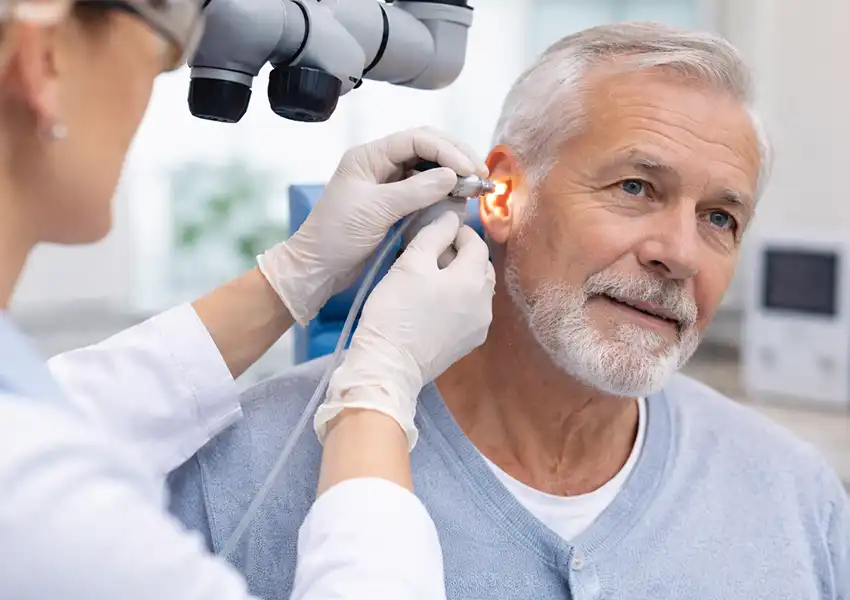
Microsuction is widely regarded as the safest and most effective method of earwax removal. It uses gentle suction under direct visual guidance and is suitable for most patients, including those who cannot undergo irrigation.
However, access to microsuction through HSCNI is extremely limited. ENT departments prioritise urgent cases, and routine wax removal rarely meets the threshold for rapid referral.
As a result, private earwax removal appointments in Northern Ireland have become increasingly popular. Clinics such as Clear Hearing NI, Duality Healthcare, and Specsavers Audiology offer microsuction and irrigation with shorter waiting times. Some providers also offer home visits, which are particularly helpful for patients with mobility challenges or those living in residential care.
Private earwax removal typically costs between £50 and £80 per session. While this is an additional expense, many patients choose private care for the speed, convenience, and reassurance it provides — especially when hearing is significantly affected.
What Needs to Change for Earwax Removal Services in Northern Ireland?
The challenges surrounding earwax removal appointments in Northern Ireland highlight the need for a more sustainable, patient‑centred approach. Several improvements could make a meaningful difference:
- Reintroducing earwax removal in GP practices, supported by training and funding
- Expanding community audiology services to handle routine wax removal
- Providing clearer public guidance on safe self‑care and when to seek help
- Ensuring equitable access for patients who cannot afford private treatment
- Reducing unnecessary ENT referrals by empowering primary care teams
Earwax removal is not a luxury service — it’s a basic component of hearing health. Improving access would reduce pressure on GPs and ENT departments while preventing avoidable complications.
Conclusion
Earwax removal appointments in Northern Ireland have become increasingly difficult to access, leaving many patients dealing with avoidable hearing problems, discomfort, and frustration. While private providers currently offer the most reliable access to timely treatment, long‑term solutions must focus on restoring safe, accessible services within the public healthcare system.
Until access improves, patients are encouraged to seek professional advice, avoid unsafe home remedies, and consider reputable private clinics when prompt earwax removal is needed. Hearing health is essential, and earwax removal should not be difficult to obtain in Northern Ireland.
Newsletter Updates
Enter your email address below and subscribe to our newsletter