Book Appointment Now

How Weather in Northern Ireland Affects Ear Health: What People in Dungannon, Cookstown & Omagh Should Know
Northern Ireland’s climate is known for its mild temperatures, high humidity, and frequent rainfall, conditions shaped by the Atlantic Ocean and the region’s varied landscape. According to the Met Office Northern Ireland, the climate is characterised by “equability,” with cool summers, mild winters, and consistently moist air throughout the year.
Met Office NI – Climate Overview.
While this climate contributes to Northern Ireland’s green and beautiful landscape, it also significantly affects ear health, particularly among residents of inland towns such as Dungannon, Cookstown, and Omagh. Many residents experience seasonal earwax build‑up, blocked ears, pressure changes, and recurring infections, often without realising that the weather plays a major role in ear health.
Understanding how local weather affects your ear health can help you anticipate problems and know when to seek professional care.
How Northern Ireland’s Climate Influences Ear Health
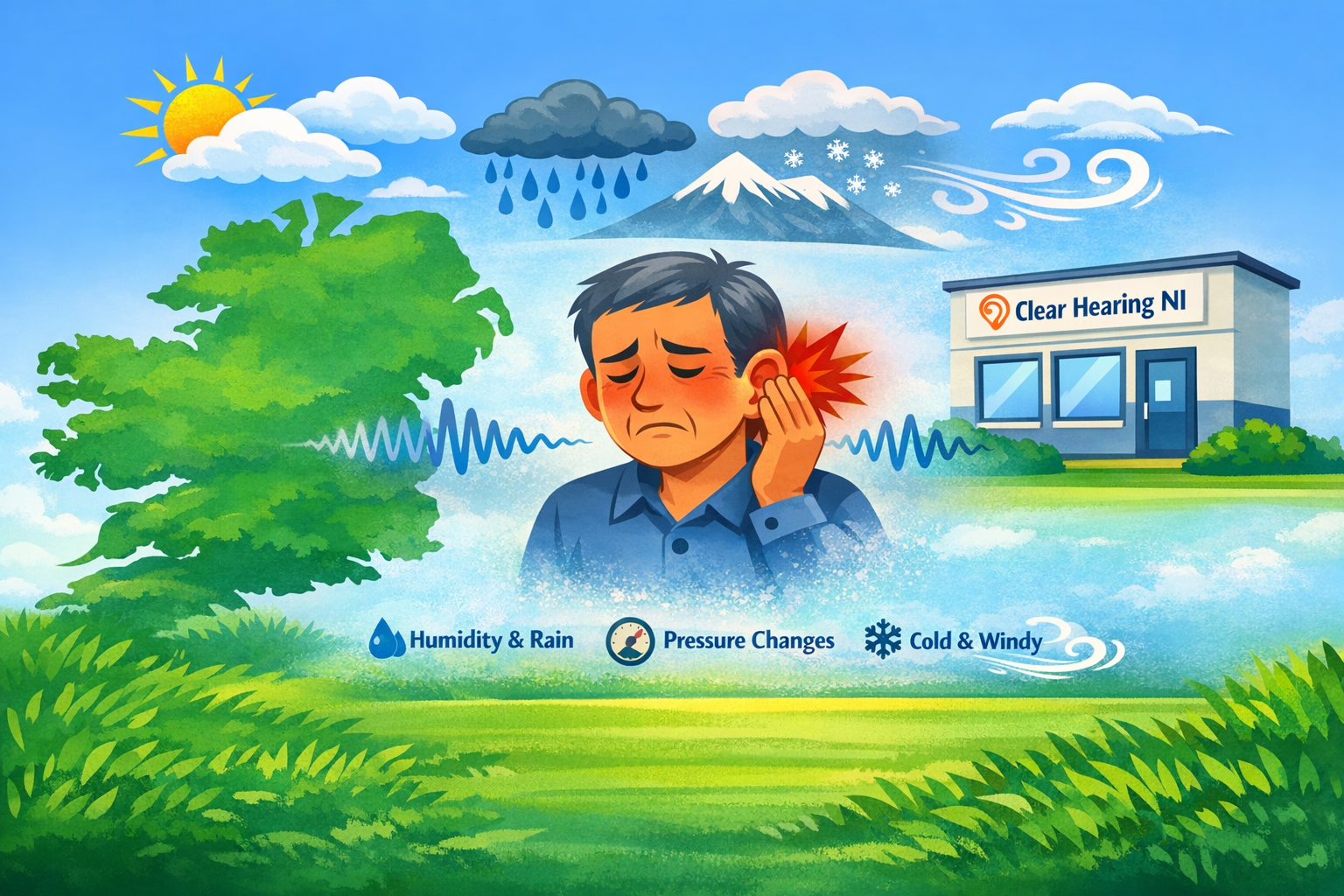
Humidity and Moisture Levels
Northern Ireland experiences consistently high humidity due to its maritime climate. Humid air can cause earwax to absorb moisture and swell, making it softer, stickier, and more likely to block the ear canal. This is especially noticeable during long periods of damp weather, which are common across County Tyrone.
People in Dungannon and Cookstown, where fog and mist often settle in low‑lying areas, frequently report a feeling of fullness in the ears during humid spells. Moisture can also encourage bacterial growth, increasing the risk of outer‑ear infections (otitis externa).
Temperature Fluctuations
The Met Office notes that winter temperatures in Northern Ireland typically range from 0.5°C to 2.5°C at low altitudes, with colder conditions inland.
Met Office NI – Temperature Data.
Sudden temperature drops can cause the Eustachian tube, the small passage that equalises pressure between the middle ear and throat, to become inflamed or blocked. This leads to pressure imbalance, muffled hearing, and discomfort.
Residents in Omagh, which sits close to the Sperrin foothills, often experience sharper temperature swings, making them more prone to weather‑related ear pressure issues.
Air Pressure Changes
Northern Ireland frequently experiences low‑pressure systems moving in from the Atlantic. These pressure changes can cause:
- Ear popping
- Temporary hearing reduction
- A sensation of fullness
- Increased tinnitus symptoms
People who already struggle with sinus issues, allergies, or Eustachian tube dysfunction often feel these effects more strongly.
Wind and Rain Exposure
Strong winds — common across Tyrone’s open rural landscapes can irritate the ear canal, especially if moisture enters the ear. Rain and wind exposure can also trigger or worsen outer‑ear infections.
Those who work outdoors in Cookstown and Omagh often report increased ear discomfort during stormy periods.
Seasonal Ear Problems in Northern Ireland
Winter: Blocked Ears and Pressure Issues
Cold, damp winter air causes earwax to harden more quickly. Combined with increased indoor heating, which dries the ear canal, this can lead to stubborn blockages. Winter is also peak season for colds and sinus infections, which directly affect the Eustachian tube.
Spring: Allergies and Eustachian Tube Dysfunction
Tree and grass pollen can inflame the nasal passages and Eustachian tube, causing muffled hearing, popping, and pressure. People in rural areas around Dungannon and Cookstown often notice symptoms worsening during high‑pollen days.
Summer: Humidity and Ear Infections
Although Northern Ireland’s summers are mild, humidity remains high. Moisture trapped in the ear canal can lead to swimmer’s ear, even without swimming. Sweat and outdoor activity can also contribute.
Autumn: Rapid Weather Shifts
Autumn brings quick changes in temperature and pressure, which can trigger tinnitus flare‑ups and pressure‑related discomfort. This is a common complaint among residents in Omagh, where weather fronts move quickly across the Sperrins.
Why Earwax Build‑Up Is More Common in Northern Ireland
Earwax naturally protects your ear health, but weather conditions in Northern Ireland can cause it to accumulate more quickly. High humidity softens wax, while cold air hardens it, a cycle that leads to compacted blockages.
NI Direct notes that blocked ears can cause hearing loss, discomfort, and dizziness.
NI Direct – Earwax Guidance.
People in Tyrone often report symptoms such as:
- Muffled hearing
- Ear pressure
- Ringing or buzzing
- A feeling of fullness
- Difficulty equalising pressure
These symptoms often worsen during prolonged damp or cold spells.
Local Factors in Dungannon, Cookstown & Omagh
Dungannon
With its mix of rural farmland and built‑up areas, Dungannon experiences persistent humidity and fog, especially in winter. These conditions contribute to earwax swelling and pressure issues.
Cookstown
Located near Lough Neagh and surrounded by open countryside, Cookstown often experiences moisture‑laden air and sudden weather changes. Residents frequently report blocked ears during damp spells.
Omagh
Close to the Sperrin Mountains, Omagh sees more pronounced temperature shifts and strong winds. These conditions can irritate the ear canal and worsen Eustachian tube dysfunction.
How to Protect Your Ear Health in Northern Ireland’s Climate
A few simple habits can help reduce weather‑related ear health problems:
- Keep ears dry during wet or windy weather.
- Avoid inserting cotton buds, which push wax deeper.
- Use a hat or ear covering in cold winds.
- Manage allergies during spring and summer.
- Seek professional earwax removal if symptoms persist.
For many people, weather‑related ear health issues don’t resolve on their own. Professional microsuction is the safest and most effective way to remove earwax and restore hearing.
When to Seek Professional Ear Care
If you live in Dungannon, Cookstown, or Omagh and experience persistent blocked ears, pressure, or hearing loss, it may be time to book an appointment. Weather‑related symptoms often worsen without treatment, especially during prolonged damp or cold periods. Clear Hearing NI provides safe, gentle microsuction earwax removal across Northern Ireland.