Book Appointment Now

Blocked Ears? Discover How to Know If It’s Ear Wax — And When to Get Professional Help
Blocked Ears? And When to Get Professional Help
It starts with a muffled sound. Maybe your ear feels full, like you’re underwater. You tilt your head, yawn, chew gum, but nothing shifts. If this sounds familiar, you might be dealing with a common but often overlooked issue: earwax build-up.
Blocked ears can affect anyone, but they’re especially common in older adults, hearing-aid users, and people with narrow ear canals. The good news? Most cases are easily treatable if you know what to look for and when to seek help.
What Does Earwax Do — And Why Does It Sometimes Cause Problems?
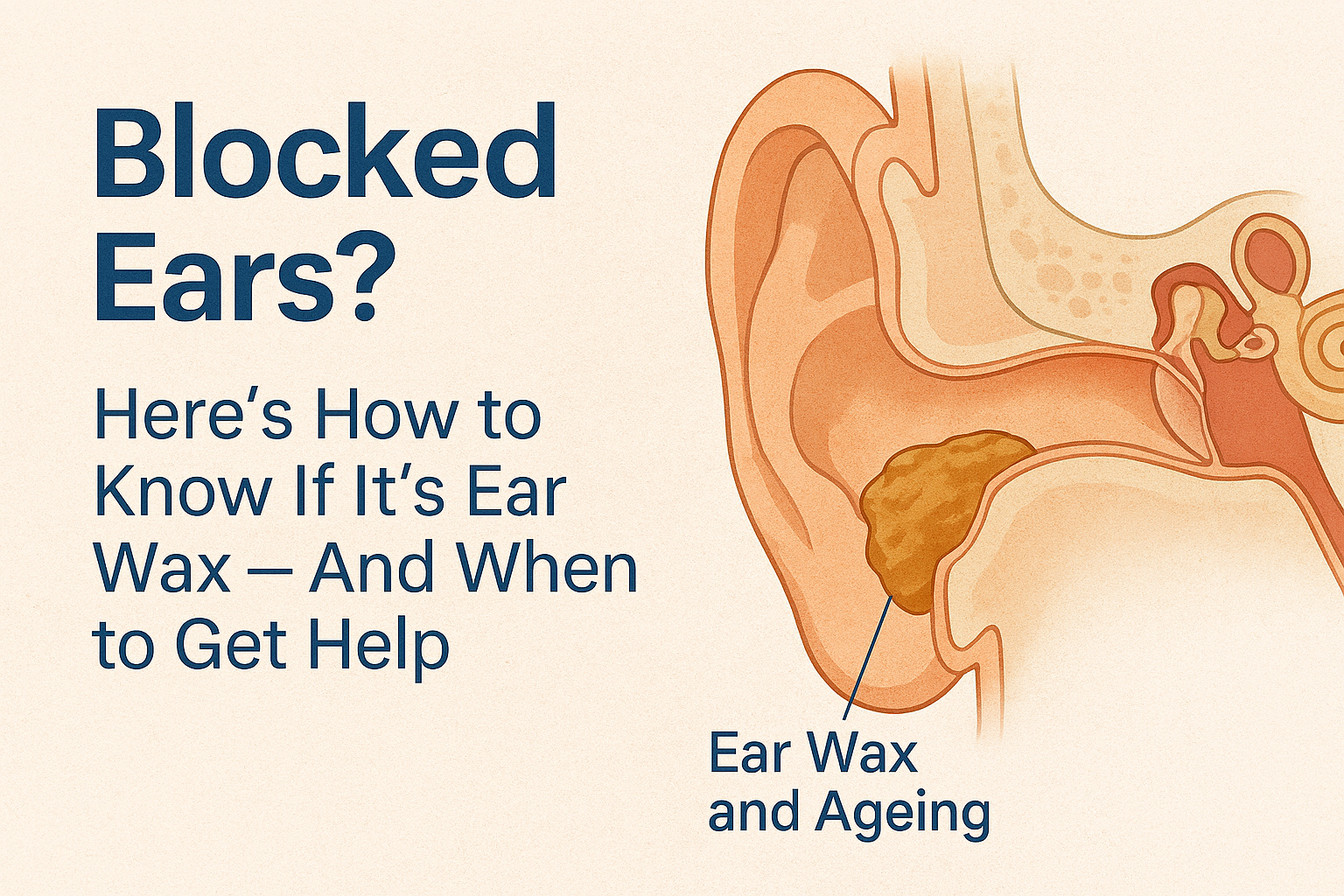
Earwax (or cerumen) is your body’s natural defence system. It traps dust, protects the ear canal, and helps prevent infections. Normally, earwax migrates out of the ear on its own. But sometimes, it builds up and becomes impacted, especially if it’s dry, hard, or pushed in by cotton buds or hearing aids.
According to the NHS, earwax build-up can cause hearing loss, earache, tinnitus, dizziness, and even infections if left untreated.
How to Tell If Wax Causes Your Blocked Ears
Blocked ears can feel different for everyone, but there are some telltale signs that point to earwax as the cause.
Muffled or Reduced Hearing
Sounds may seem distant or foggy. You might find yourself turning up the TV or asking people to repeat themselves.
A Feeling of Fullness or Pressure
Blocked ears might feel heavy, pressurised, or like something’s lodged inside. This sensation often worsens when chewing or yawning.
Ringing or Buzzing (Tinnitus)
Impacted wax can press against the ear canal, triggering tinnitus, a persistent ringing or buzzing sound.
Itching or Irritation
If your ear feels ticklish or irritated, wax may be the culprit. Scratching only makes it worse.
Dizziness or Balance Issues
In severe cases, blocked ears can affect your balance, leaving you lightheaded or wobbly.
Unpleasant Smell or Discharge
Rarely, wax build-up can cause discharge or an odour. If this happens, seek help immediately.
When to Seek Professional Earwax Removal
While mild wax build-up may resolve on its own, there are clear signs that it’s time to book an appointment:
- Your hearing is significantly reduced
- You feel persistent pressure or discomfort
- Home remedies haven’t worked after 5 days
- You wear hearing aids and suspect wax is interfering
- You’ve had ear infections or perforated eardrums in the past
Trying to fix it yourself with cotton buds or ear candles can push wax deeper, damage the ear canal, or cause infection. The NHS strongly advises against using objects to remove wax yourself.
What Is Microsuction — And Why Is It Recommended?
Microsuction is a safe, modern method of earwax removal that uses a gentle suction device to clear the ear canal. It’s quick, painless, and doesn’t involve water, making it ideal for people with sensitive ears or perforated eardrums.
At Clear Hearing NI, microsuction is performed by trained professionals using sterile equipment. The procedure takes just a few minutes and offers instant relief.
You can learn more about our earwax removal services here:
https://clearhearingni.com/ear-wax-removal/
Can I Get Earwax Removal Near Me?
Yes — Clear Hearing NI offers earwax removal near you across Tyrone, Fermanagh, and Armagh. We provide home visits, making it easy for older adults, carers, and busy families to access care.
If you’re searching for “earwax removal near me” and live in Northern Ireland, we’re here to help. Our mobile service brings professional care directly to your door, no travel, no stress.
What Happens During an Appointment?
Whether you visit our clinic or book a home visit, here’s what to expect:
- A friendly, professional ear health check
- A clear explanation of the procedure
- Safe, gentle microsuction using modern equipment
- Immediate relief and improved hearing
- Advice on future ear care and prevention
Most people describe the experience as “quick and painless” — and many are surprised by how much better they feel afterwards.
How to Prevent Future Blockages
While you can’t prevent earwax entirely (it’s there for a reason), you can reduce the risk of build-up:
- Avoid cotton buds and ear candles
- Keep ears dry after swimming or bathing
- Use olive oil drops occasionally to soften wax
- Book routine ear checks if you’re prone to wax build-up
If you wear hearing aids, regular checks are especially important. Devices can push wax deeper and block sound, so keeping your ears clear helps your aids work better.
Blocked Ears and Hearing Aids
Hearing aids and earwax don’t always get along. Wax can:
- Block the sound outlet
- Cause feedback or whistling
- Make the device uncomfortable to wear
Routine earwax removal helps hearing aids perform at their best. If you’ve noticed a change in sound quality or comfort, wax may be the issue.
Don’t Suffer in Silence — Get Help Today
Blocked ears can affect your hearing, balance, and quality of life. But with professional help, relief is just a phone call away.
Clear Hearing NI offers earwax removal near you using safe, gentle microsuction with the option of home visits for added convenience. Whether you’re dealing with blocked ears, muffled hearing, discomfort, or just want peace of mind, we’re here to help. Visit https://clearhearingni.com to learn more or book your appointment today.