Book Appointment Now

The Ultimate 7‑Step Guide to Safe Ear Drops: What NI Clinicians Want You to Know
Ear drops seem simple: a quick squeeze of a bottle and you’re done. But in Northern Ireland, clinicians regularly see patients who use ear drops incorrectly, choose the wrong product, or use them for too long. These mistakes can lead to irritation, infections, worsening blockages, and even temporary hearing loss. That’s why NI clinicians emphasise that safe ear‑drop use is more than just following the label; it’s about understanding how ear drops work, when they’re appropriate, and when they’re not.
This Ultimate 7‑Step Guide brings together expert insights, NI‑specific expectations, and practical advice to help you use ear drops safely and effectively. Whether you’re dealing with stubborn earwax, discomfort, or preparing for microsuction, this guide will help you make informed decisions that protect your ears.
Step 1: Understand What Ear Drops Actually Do
Ear drops fall into a few main categories: softening drops for wax, medicated drops for infection, and soothing drops for irritation. In Northern Ireland, clinicians frequently remind patients that not all ear drops are interchangeable. Softening drops (like olive oil or sodium bicarbonate) help loosen wax, while medicated drops may contain antibiotics or steroids and must be prescribed.
According to NHS guidance, use ear drops only for the condition they’re intended to treat, and never share or reuse medicated drops for a different issue.
Understanding the purpose of your ear drops is the foundation of safe use. If you’re unsure, a clinician or ear‑care specialist can confirm whether the product is appropriate for your symptoms.
Step 2: Choose Ear Drops That Meet NI Safety Standards
Northern Ireland follows strict medicine‑supply regulations under the MHRA and the Windsor Framework. This means ear‑care products must meet UK‑wide safety, quality, and efficacy standards before they can be sold or supplied.
For over‑the‑counter wax‑softening drops, look for products that:
- Are clearly labelled for earwax removal
- Have UK‑approved packaging
- Include dosage and safety instructions
- Are suitable for adults and/or children as indicated
Avoid imported or unlabelled products sold online, as these may not meet NI regulatory requirements.
If you’re preparing for microsuction ear wax removal, NI clinicians often recommend simple olive‑oil drops for 3–5 days beforehand, but only if you have no perforated eardrum, no active infection, and no history of ear surgery.
Step 3: Apply Ear Drops Correctly (The Clinician‑Approved Method)
Correct technique is essential for safe ear‑drop use. NI clinicians consistently teach the same method because it ensures the drops reach the ear canal rather than sitting at the entrance.
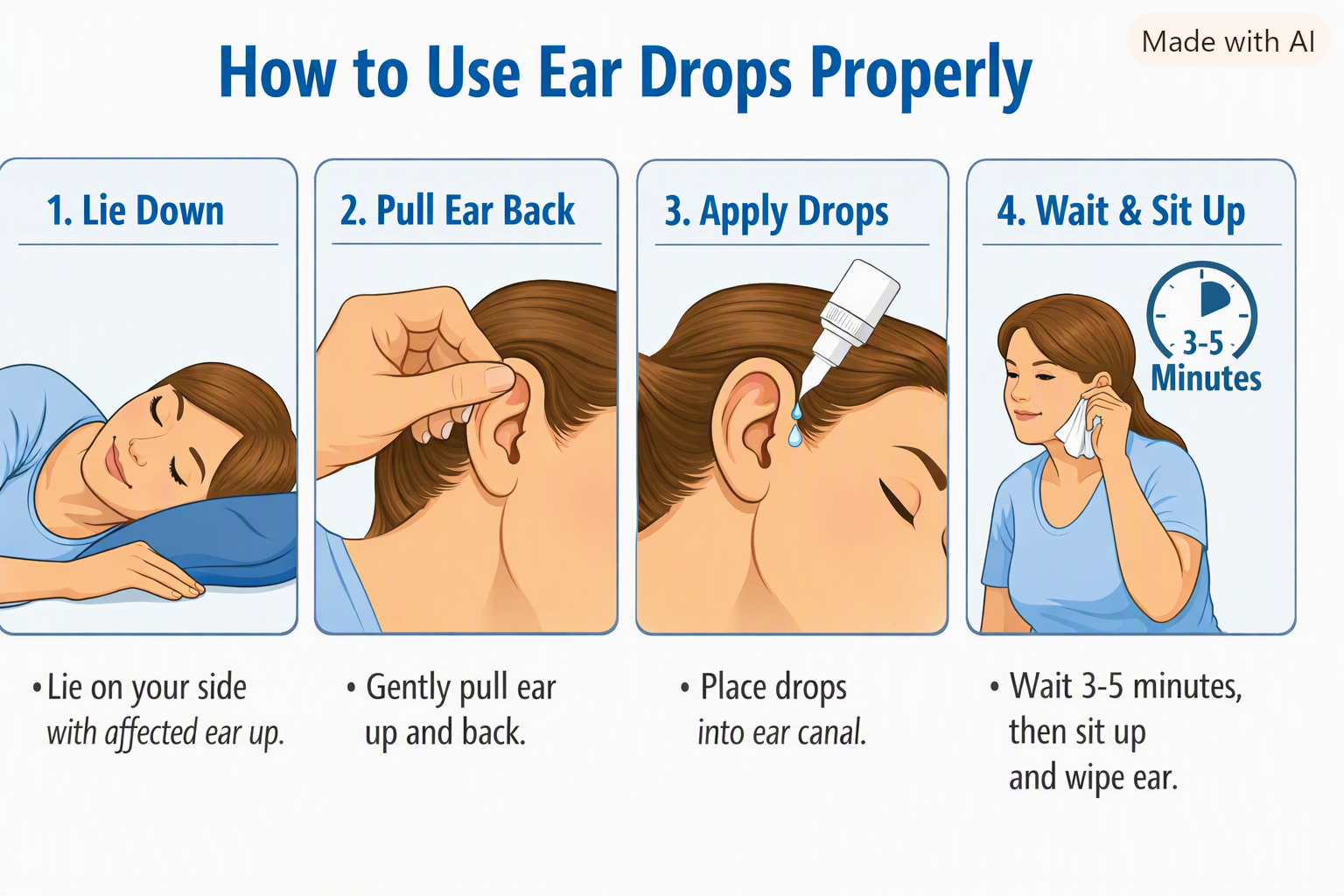
The Clinician‑Approved Technique
- Lie on your side with the affected ear facing upward.
- Gently pull the outer ear upwards and backwards to straighten the canal.
- Apply the recommended number of drops.
- Stay in position for 3–5 minutes to allow the drops to penetrate.
- Sit up slowly and wipe away any excess fluid.
This method helps the drops reach the wax or affected area without causing pressure or discomfort. It also reduces the risk of drops running straight back out, which is a common reason they fail to work.
Step 4: Avoid the Most Common Ear‑Drop Mistakes in NI
NI clinicians frequently report the same avoidable issues among patients:
Using Ear Drops for Too Long
Softening drops should generally be used for no more than 5–7 days, unless a clinician advises otherwise. Overuse can lead to swelling, irritation, or excessive moisture in the canal.
Using Ear Drops When You Have an Infection
If your ear is painful, leaking fluid, or smells unpleasant, you may have an infection. Softening drops can worsen symptoms. Only medicated drops prescribed by a GP or ENT specialist should be used.
Using Ear Drops With a Perforated Eardrum
This is one of the most serious mistakes. Drops entering the middle ear can cause severe pain, dizziness, and infection. If you suspect a perforation, avoid all drops until assessed.
Mixing Different Types of Ear Drops
Combining products can cause chemical irritation or reduce effectiveness. Stick to one product unless a clinician advises otherwise.
Step 5: Know When Ear Drops Are Not Enough
Ear drops are helpful for mild to moderate wax build‑up, but they have limitations. NI clinicians often explain that drops cannot remove hard, impacted wax or wax that has been pushed deep into the canal by cotton buds.
If you’ve used drops for several days with no improvement, or if your hearing is significantly reduced, it’s time for professional help. Microsuction is the gold‑standard method recommended by NHS and NICE guidelines because it is safe, dry, and precise.
Clear Hearing NI offers clinically trained microsuction services across Northern Ireland, and you can learn more here: https://clearhearingni.com/microsuction-ear-wax-removal/
Step 6: Follow NI‑Specific Expectations for Ear‑Care Safety
Northern Ireland’s regulatory environment places strong emphasis on patient safety, particularly regarding medicines and medical devices. Under MHRA guidance, products supplied in NI must meet UK‑wide authorisation standards, ensuring they are safe for public use.
Clinicians in NI also follow NICE‑aligned protocols for ear‑care assessment, meaning you can expect:
- Clear guidance on whether drops are appropriate
- Advice tailored to your medical history
- Referral for microsuction when drops are unsuitable
- Safety checks for perforation, infection, or previous ear surgery
This structured approach ensures that ear‑drop use is safe, appropriate, and effective.
Step 7: Know When to Seek Professional Ear‑Care Support
Ear drops are a useful tool, but they are not a cure‑all. NI clinicians recommend seeking professional help if:
- Your hearing is significantly reduced
- You experience pain or dizziness after using drops
- Drops have no effect after 5–7 days
- You suspect an infection
- You have a history of perforation or ear surgery
- You need fast relief before travel, work, or events
Microsuction offers immediate results and is safe for most people, including those who cannot use ear drops. If you’re in Northern Ireland and need expert support, Clear Hearing NI provides safe, modern ear‑care services delivered by trained clinicians.
Final Thoughts
Safe ear‑drop use is simple when you know what NI clinicians want you to understand: choose the right product, apply it correctly, avoid common mistakes, and seek professional help when needed. With Northern Ireland’s strong regulatory standards and access to high‑quality microsuction services, you can manage earwax and ear discomfort safely and confidently.
If you’re experiencing blocked ears, discomfort, or reduced hearing, you can learn more about safe, clinician‑led ear wax removal here: https://clearhearingni.com/microsuction-ear-wax-removal/