Book Appointment Now

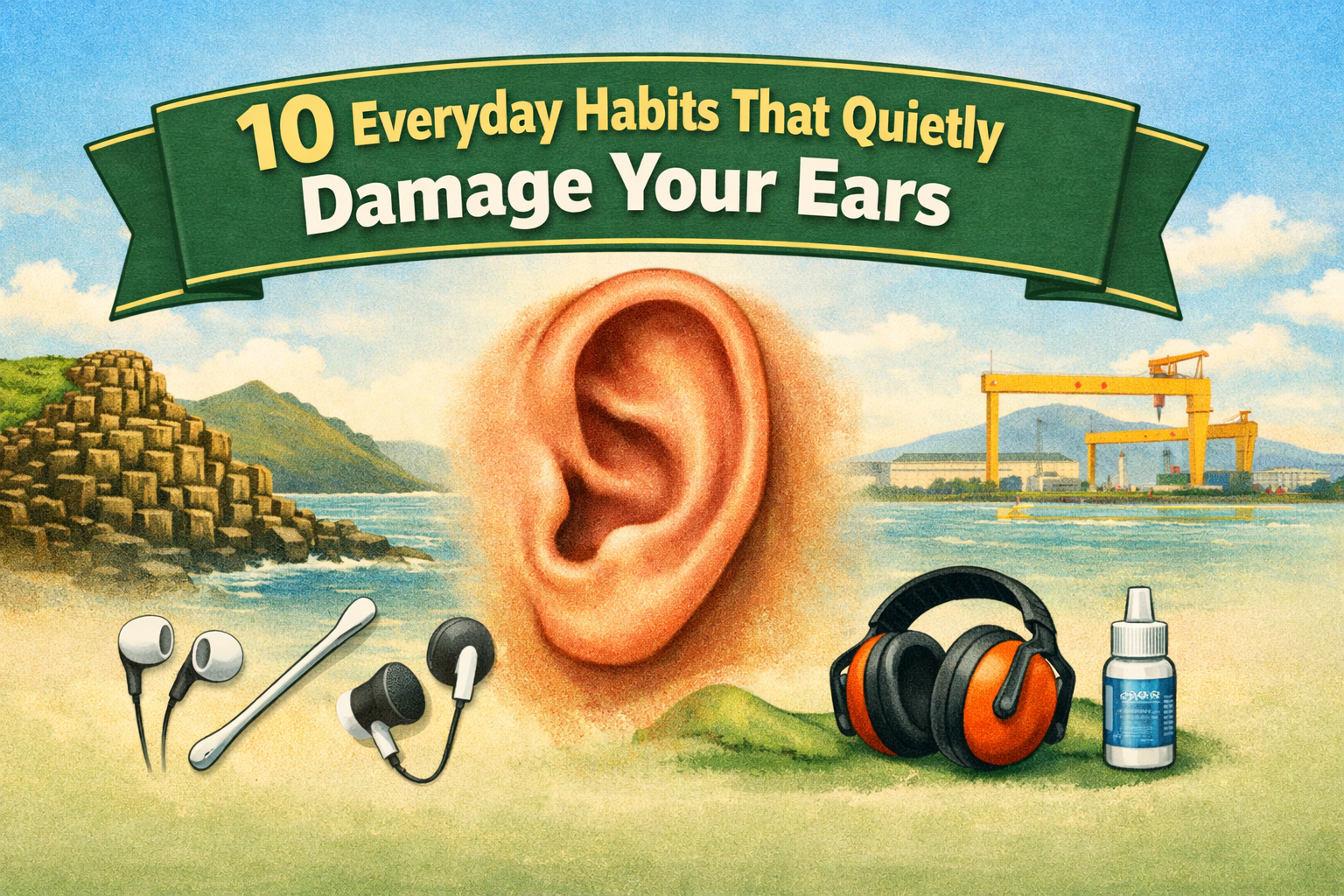
10 Everyday Habits That Quietly Damage Your Ears — And How to Fix Them
Most people in Northern Ireland think of problems with your ears as something that “just happens with age.” Still, the truth is that many of the most common issues- blocked ears, tinnitus, infections, and gradual hearing loss are caused by everyday habits we barely notice. From the way we clean our ears to how we work, commute, and relax, small daily behaviours can quietly chip away at your ear health over time.
The good news is that once you understand what’s causing the damage, you can reverse many of these habits and protect your hearing for the long term. Below are ten of the most common culprits we see in clinics across NI, along with simple, practical fixes that make a real difference.
1. Using Cotton Buds (Q‑Tips) Inside the Ear Canal
Cotton buds remain one of the biggest causes of ear damage in Northern Ireland. Despite guidance from the NHS and the Public Health Agency, many people still use them to “clean” their ears. Instead of removing wax, cotton buds push it deeper, compacting it against the eardrum. This leads to blockages, infections, tinnitus, and even perforations.
How to fix it
Stop inserting anything into your ears. The ear is self‑cleaning. If you feel blocked, book safe microsuction ear wax removal in Northern Ireland with a trained clinician.
External reference: NHS guidance on ear cleaning
2. Listening to Music Too Loud — Especially Through Earbuds
Modern earbuds sit deep in the ear canal, delivering sound directly to the eardrum. Many people in NI listen at 70–90% volume, especially when walking along busy roads or using public transport. This can permanently damage the delicate hair cells responsible for hearing.
How to fix it
Follow the 60/60 rule: no more than 60% volume for 60 minutes at a time. Noise‑cancelling headphones help reduce the need to turn the volume up to compete with background noise.
3. Ignoring Ear Protection at Work
Northern Ireland has strict workplace noise regulations under the Control of Noise at Work Regulations (NI) 2006, but many workers, especially farmers, joiners, mechanics, and factory staff still underestimate the long‑term impact of noise exposure. Tractors, power tools, livestock sheds, and machinery can all exceed safe decibel levels.
How to fix it
Wear proper hearing protection every time you’re exposed to loud noise. Employers in NI must provide suitable PPE and training. If you’re self‑employed, invest in CE‑approved ear defenders or custom‑fit plugs. Protect your ears!
4. Sleeping with Earbuds or Headphones In
Many people fall asleep listening to podcasts or music. Unfortunately, this keeps the ear canal warm, moist, and blocked for hours the perfect environment for infections and wax build‑up.
How to fix it
Use a bedside speaker at low volume or a pillow speaker. Give your ears time to breathe overnight.
5. Overusing Ear Drops and Home Remedies
Olive oil drops, bicarbonate solutions, and over‑the‑counter sprays are widely used across NI. While they can help soften wax, overuse can irritate the ear canal, cause swelling, and worsen blockages in your ears.
How to fix it
Use drops only as directed and avoid long‑term use. If wax doesn’t clear within a few days, book a professional microsuction appointment the safest method recommended by clinicians.
6. Swimming or Showering Without Drying Your Ears Properly
Moisture trapped in the ear canal can lead to otitis externa (swimmer’s ear), a painful infection we see frequently in NI, especially among swimmers, surfers, and people who shower multiple times a day.
How to fix it
After swimming or showering, gently dry the outer ear with a towel. Tilt your head to let water drain naturally. Never insert tissues, cotton buds, or fingers.
7. Ignoring Early Signs of Hearing Loss
Many people delay seeking help because they think hearing loss is “just part of getting older.” But early intervention can prevent further deterioration and improve quality of life.
How to fix it
If you notice muffled hearing, difficulty following conversations, or needing to turn the TV up, book a hearing check. Early assessment is key.
External reference: RNID hearing loss information
8. Wearing Earplugs Incorrectly — or Not at All
Whether it’s concerts in Belfast, motorbike rides along the Antrim Coast, or noisy events, many people either skip earplugs or use cheap foam ones incorrectly. Poorly fitted plugs offer almost no protection.
How to fix it
Use high‑fidelity earplugs that reduce volume without distorting sound. Make sure they’re inserted correctly and replaced when worn out.
9. Leaving Ear Conditions Untreated
Blocked ears, recurring infections, tinnitus, and dizziness are often ignored until they become severe. In NI, long NHS waiting lists mean many people simply “put up with it,” but untreated problems can worsen over time.
How to fix it
Seek early assessment. Private ear care services in Northern Ireland can offer same‑day or next‑day appointments, preventing complications and giving peace of mind.
Internal link: Clear Hearing NI Same‑Day Ear Care Appointments (insert your internal URL)
10. Exposure to Sudden Loud Noises — Fireworks, Sports Events, Machinery
Short bursts of loud noise can be just as damaging as long‑term exposure. Fireworks displays, concerts, football matches, and even slamming car doors can reach dangerous decibel levels.
How to fix it
Carry ear protection when attending loud events. Keep children’s ears especially protected; their ear structures are more sensitive to damage.
Final Thoughts: Protecting Your Ears Starts with Small Daily Changes
Ear health is something most people in Northern Ireland don’t think about until something goes wrong. But your ears are delicate, and once hearing is damaged, it cannot be restored. By making small changes avoiding cotton buds, lowering headphone volume, protecting your ears at work, and seeking help early you can prevent long‑term problems and keep your hearing healthy for years to come.
If you’re experiencing blocked ears, reduced hearing, or discomfort, professional microsuction ear wax removal in NI is the safest and most effective option. Clear Hearing NI provides clinician‑led care, local expertise, and fast appointments across Northern Ireland. Your ears are important!